
AI consulting for small businesses in Minneapolis and St. Paul

A device maker across the Twin Cities audits a shop's paperwork, while a new buyer in Iowa only wants a correct quote. Software prepares both, and someone at the shop decides.

Where AI is worth doing in the Twin Cities

Manufacturing in the Twin Cities is mostly small shops, and many of them sell to medical device makers and other large customers who audit what they buy. In a machine shop of a few dozen people, every job drags a set of documents behind it: the quote, the inspection records, the certificates, the change notices. Each has to agree with the others and with the current drawing revision, and checking that falls to the quality lead. The insurance agencies and offices around the plants carry a similar load in applications, renewals and follow-up that repeat every day.

For that shop we would build a document checker for the quality lead. A certificate or inspection record is read as it arrives and set against the order and the drawing revision on file. What does not agree goes into a short list for the quality lead, who decides whether a part is held, reworked or released. In an insurance agency, the same kind of tool gathers what is missing from an application, and an agent reviews advice and anything that binds coverage. Before building, we compare a tool the business already owns, ordinary automation and AI, and build the smallest thing that works. Paperwork that agrees is filed to the job without anyone handling each sheet. We run our own businesses this way, with court-record lookups and reminder texts handled by software we built, and nobody lost a job.

Consider an order from outside Minnesota: a buyer in Sioux Falls sends a drawing and asks for a price. The request is logged, compared with what the shop makes and placed in front of the estimator, who sets the price. When the order follows, its certificates and inspection records pass through the same checker as the device maker's, and the buyer hears when the parts have left. The last message in the thread is the buyer confirming delivery. Nobody from the shop drove to Sioux Falls, and nobody was hired to handle the order. One from Wisconsin or Iowa, or from a buyer overseas, would take the same route.

What you receive

  • One recurring task, chosen with the person who owns it.
  • An honest comparison: buy, use what you have, or build.
  • A working build with a route to a person.
  • Guidance, test results and a handover your team can run.

How it runs

  • We watch the work as it is done now and measure it: how often, how long, how much rework.
  • We map it: what starts it, what information it needs, which cases need a person.
  • We build the first workflow and compare its results with the current process, using your real examples.
  • We hand it over with the rules, the failure handling and who owns what written down.
Everything that is included

Scope and investment

Three ways to start.

Prices in US dollars (USD)

One task

$1,500

You know the task. We watch it done, write down the steps and the exceptions, and give you a fixed price and a timeline to build it.

Automation roadmap

$3,500

Up to three processes, or one department. We rank them by time saved against cost and give you a 90-day plan, with a fixed price for the first build.

Whole business review

$5,500

Everything that could be automated, and what to leave alone. A 12-month plan, a fixed price for the first build and a walk-through of the findings.

Whichever you choose, the fee is credited in full when you complete the build with us.

Work you can inspect

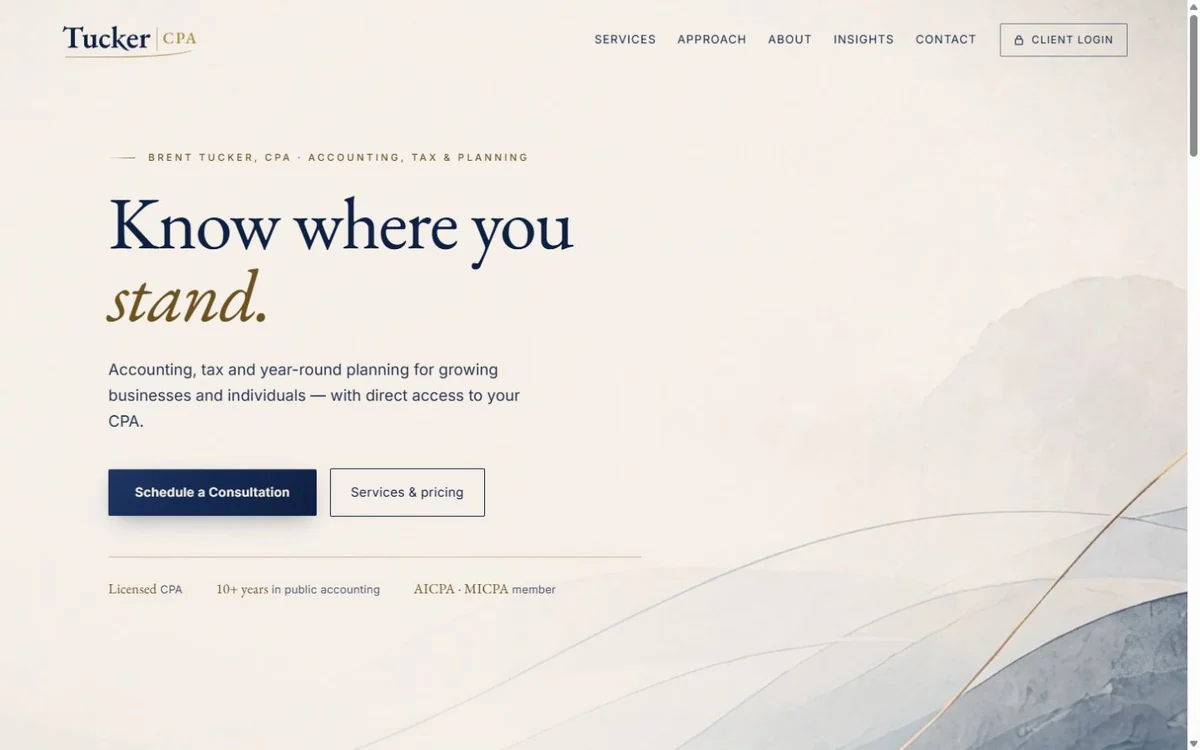
The Tucker CPA website home page, built by Butler Agency

Tucker CPA

We built the brand, the website and a national content system for a new CPA firm, and we handle its SEO.

Read the case study
The Beyond the Bedside Foundation website home page, built by Butler Agency

Beyond the Bedside Foundation

A website for a new children’s foundation, built for families, student volunteers and supporters.

Read the case study

Questions before we start

We make parts for medical device companies. Can AI be used where records are audited?

For preparing and checking, yes, as long as a person makes the decision and the software leaves a record of what it did. Before we start, we write down with your quality lead which steps your quality system reserves for a qualified person, and the software stays out of those.

A customer sends a change notice in the middle of a run. What does the checker do with it?

It compares the notice with the jobs open on your floor and lists the ones still on the earlier drawing revision. Your quality lead sees that list and decides what stops, what is reworked and what ships. The software does not change a job by itself.

Which parts of an insurance agency's day can go to software, and which stay with an agent?

Collecting what is missing from an application, preparing renewal reminders, drafting routine replies and entering what is already on a form are all work software does well. Advice, and anything that binds coverage, stays with an agent, who reviews it before it goes out.

What would you like your business to do next?

Tell us where the work gets stuck or where you want to grow. We will help you choose a practical first step.

Discuss your project